Project Storkwitz

Status
Active Exploration
Primary resource
RE₂O₃
Responsible agency
Oberbergamt

Europe's rare earth security starts here

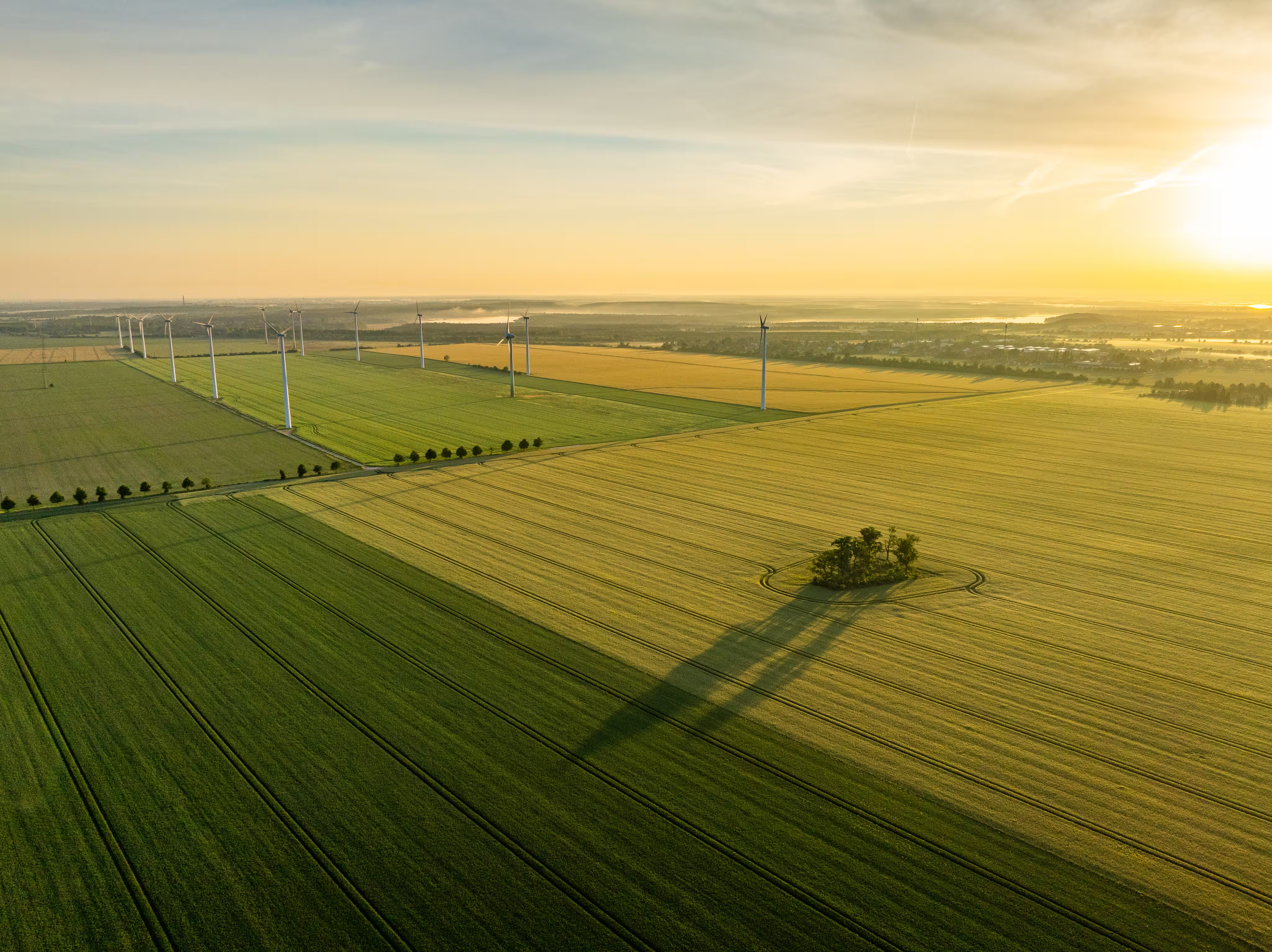
Storkwitz is the only known rare earth deposit in Germany, a carbonatite-hosted system in Saxony. Based on previous exploration campaigns and historical estimates, there are indications of 38,000 tonnes of rare earth oxides and 8,000 tonnes of niobium pentoxide. The permanent magnets in Europe's electric vehicles, wind turbines, and advanced electronics are central to the continent's industrial future, and Storkwitz represents an opportunity to supply them from European soil.
Timeline
  • Resource estimation

    Based on the analysis of historical data and more recent studies, reserves are currently estimated at 38,000 metric tons rare earth oxides and 8,000 metric tonnes of niobium pentoxide, composed of approximately 38% Cerium (Ce), 35% Lanthanum (La), 14% Neodymium and Praseodymium (Nd + Pr), 5% Yttrium (Y), and 8% other rare earth elements.

  • Permitting

    The mining permit process in Germany is managed by the competent mining authority, which oversees administrative procedures for raw material extraction, transportation, and energy storage. The authority provides guidance on relevant laws and regulations, processes applications, and forwards decisions to counties, municipalities, and agencies.
    Applications must be submitted in writing and in full. The authority reviews them for grounds for rejection and issues a decision following public participation. The permit for the license area was issued by the Saxon Mining Authority.

  • Exploration

    Planned 2027

    Further exploration is planned for 2027.

  • Project Development

    Planned 2027

    Project development is planned for 2027.

  • Extraction

    Planned 2028/2029

    Extraction is planned for 2029.

REE oxide prices
Cerium oxide
CNY 14,000–14,500/t
Lanthanum oxide
CNY 5,100–5,700/t
Pr-Nd oxide
CNY 775,000–780,000/t
Yttrium oxide
CNY 70,000–73,000/t
EUR/CNY
8.0353
EUR/USD
1.1780
Updated 15 April 2026
REE basket
Cerium (Ce)
~38%
Lanthanum (La)
~35%
Nd + Pr
~14%
Yttrium (Y)
~5%
Other REE
~8%
Deposit information
Main pipe
170–900 m · ~150 m wide
Satellite 1
~200–700 m · smaller
Satellite 2
~250–600 m · smallest

Technological leap

Hades is a technology-driven resource company rethinking access to the subsurface through a modular, software-controlled approach to deep drilling.

Environment

Responsible Development & Environmental Stewardship
Environmental responsibility is a core principle throughout every stage of the project. Hades is committed to meeting all applicable environmental and mining regulations while integrating environmental considerations into project planning from the outset.
Minimal Surface Impact by Design
Unlike conventional open-pit mining, the planned extraction concept is based on deep underground operations, significantly reducing the project's surface footprint. This approach enables access to critical raw materials while minimising impacts on surrounding land and ecosystems wherever practicable.
Monitoring, Restoration & Transparency
Environmental monitoring and site restoration will be carried out in accordance with regulatory requirements and project approvals. Hades is committed to maintaining transparent engagement with authorities, local communities and other stakeholders throughout the project lifecycle.

Regional Benefits

Employment & Regional Economy
Local and regional hiring across geology, drilling, logistics and administration. Procurement prioritises Nordsachsen suppliers to keep economic benefits in the region.
Infrastructure & Location
Direct access to rail, road and grid connections in Nordsachsen, with industrial-zoned land that keeps build-out fast and strengthens the region's long-term competitiveness.
Knowledge & Innovation
Partnerships with regional universities support training, applied research and a skilled local workforce, keeping technical expertise rooted in Nordsachsen for the long term.

The History of Storkwitz

The right opportunity for a historic site
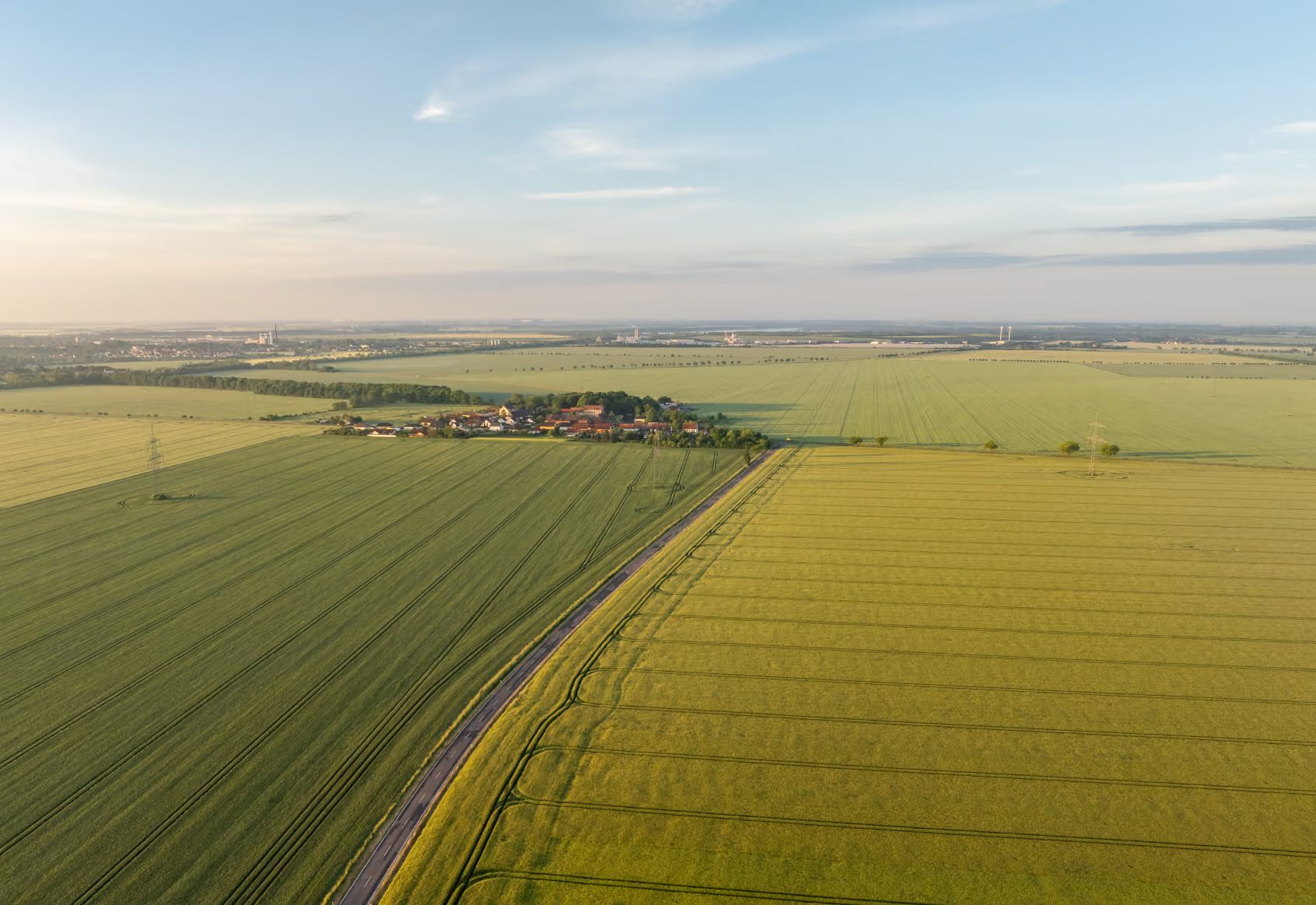
GDR geologists drilled 49 holes near Delitzsch between 1973 and 1985, identifying what would become Europe's most significant rare earth discovery at that time. After re-unification, the deposit was never developed because the market didn't exist yet.
Transversal drilling at Delitzsch 1982
© Landesamt für Umwelt, Landwirtschaft und Geologie des Freistaates Sachsen

Source documents

Erlaubniskarte

PDF · 20 July 2026

The Delitzsch Carbonatite Complex

PDF · 20 July 2026

Geochemical and mineralogical characterization of the REE mineralization

PDF · 20 July 2026
We continuously update this page with the latest status of the project. The information and documents describe the current status of permits and known key geological data. They do not constitute an investment recommendation, a statement of reserves or resources in accordance with international standards, or a guarantee of future mining operations.

Get Involved

We need investors, partners, and local advocates. We're building for all three.

Investors

Review the resources & speak with our team.

Partners

Lead the operation locally

Residents

Questions or suggestions?
Write to us.